Decorative Floral Frame with Flowers and Leaves: Evaluating Botanical Border Designs for Your Projects
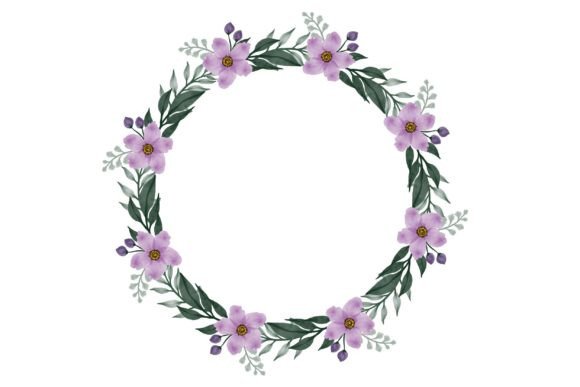
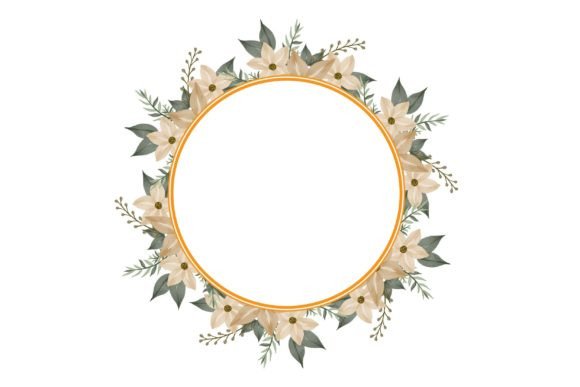
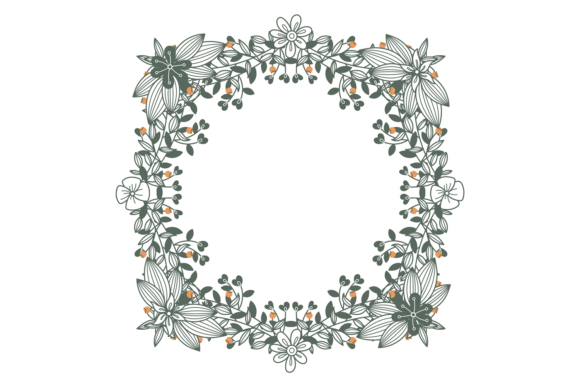
When you browse design marketplaces or stock libraries, you will almost certainly come across the term Decorative Floral Frame with Flowers and Leaves. It describes a specific category of botanical border artwork, typically composed of blossoms, foliage, and winding stems arranged in a circular, rectangular, or corner-based layout. These frames are most often isolated on a white background and offered in multiple file formats, including EPS, JPG, SVG, and transparent PNG. What makes this type of asset distinct is not just the floral motif itself, but the combination of decorative versatility and practical file flexibility that comes with it.
Designers, marketers, stationery creators, and small business owners gravitate toward these botanical borders because they bridge a gap between ornate illustration and clean, usable digital product. Yet the category is broad, and not every decorative floral frame suits every project. Understanding what you are actually comparing when you evaluate these frames can save time, reduce frustration, and lead to better visual outcomes.
Understanding What a Decorative Floral Frame Actually Offers
At its core, a Decorative Floral Frame with Flowers and Leaves is a pre-drawn or digitally illustrated ornamental border. The botanical elements are typically hand-drawn or vector-crafted, and the arrangement is designed to enclose space — making it ideal for text, logos, photographs, or monograms. The phrase "isolated on white background" signals that the artwork is separated from any surrounding context, which makes it simpler to drop into layouts without unwanted background color interference.
However, the real practical value often comes from the file format options. An EPS file preserves scalable vector paths for professional printing and resizing. An SVG offers similar scalability for web and screen use, while a transparent PNG provides instant usability for digital designs where layering matters. JPG versions, while flatter and less editable, remain useful for quick placement in presentations or social media graphics. This format variety is one area where buyers can reasonably compare one floral frame collection against another.
How Botanical Frames Compare with Other Decorative Border Styles
Placing a Decorative Floral Frame with Flowers and Leaves alongside other ornamental border types reveals meaningful differences in tone and application. Geometric borders, for example, tend to read as modern, minimal, or corporate. Damask or baroque frames feel historical and formal. In contrast, botanical frames carry an organic warmth that suits a wide range of projects, from wedding stationery to wellness branding and nature-themed packaging.
Within the botanical category itself, there are stylistic splits worth noting. Some floral frames lean heavily toward watercolor aesthetics, with soft edges and translucent washes of color. Others adopt a crisp, line-art look that mimics pen-and-ink botanical illustration. Neither approach is inherently better; the right choice depends on whether the project calls for a romantic, airy mood or a structured, vintage feel. A decorative floral frame with flowers and leaves that uses fine linework might look elegant on a formal invitation, while a looser, painterly version could suit an artisanal product label.
Evaluating File Formats and Their Practical Tradeoffs
One of the most practical comparison points when looking at any Decorative Floral Frame with Flowers and Leaves is the bundle of file formats included. Some resources provide only a JPG or PNG, which limits editing capacity. Others include both raster and vector versions, opening up far broader use cases. Understanding the tradeoffs among common formats helps clarify value.
EPS files remain the standard for professional print workflows. They can be opened in Adobe Illustrator, CorelDRAW, and other vector software, allowing you to recolor individual flower petals, adjust leaf shapes, or scale the frame to billboard dimensions without quality loss. The tradeoff is that EPS files require compatible software and a degree of technical comfort. For someone who does not work with vector graphics regularly, an EPS might be unusable without additional learning or outsourcing.
SVG files serve a similar purpose for web and digital design. They scale cleanly on responsive websites and can be animated or styled with CSS. The limitation is that not all design platforms fully support SVG uploading, and some older software handles SVG rendering inconsistently.
Transparent PNGs are the most immediately usable format for most people. You can place them directly onto invitations, social media graphics, or digital scrapbook pages without any conversion step. The tradeoff is resolution dependence. Enlarging a PNG beyond its original pixel dimensions introduces blurring and artifacts. If a file is only offered at 300 DPI in a modest size, large-format printing may be out of reach.
JPG files, while common, are the least flexible for floral frame use because the white background is baked in. That means no transparent layering over colored or textured surfaces. For quick, straightforward placements on white backgrounds, a JPG might suffice, but for most design workflows, it serves as a secondary or preview format rather than a primary working file.
When a Decorative Floral Frame with Flowers Is the Right Choice
Certain project types consistently benefit from using a Decorative Floral Frame with Flowers and Leaves. Wedding invitations and save-the-dates rank high on this list. The floral frame creates a natural enclosure for names, dates, and venue details while adding a romantic, personalized touch. Similarly, birth announcements, baptism certificates, and milestone celebration cards draw on the same emotional resonance that botanical borders provide.
Branding projects for businesses in the wellness, beauty, organic food, or artisan craft sectors also align well with floral frames. A circular botanical border can house a logo or tagline, creating a badge-like identity element that works across packaging, signage, and social media profiles. The versatility of a transparent PNG version means the same floral frame can appear on a website header, a product label, and an Instagram post without requiring separate artwork for each channel.
Digital content creators often find that botanical borders help unify visual themes. A consistent decorative floral frame applied across quote graphics, recipe cards, or blog post featured images builds a recognizable style. This is especially useful on platforms where visual cohesion influences audience perception and engagement.
Situations Where a Different Approach May Serve Better
Not every project calls for a Decorative Floral Frame with Flowers and Leaves. Minimalist brands with a strict modern aesthetic may find any ornate botanical element overly fussy. A technology startup, a law firm, or an industrial manufacturer might communicate more effectively with clean lines, sans-serif typography, and geometric spacing rather than winding vines and blossoms.
Projects that require heavy text density can also present challenges. Floral frames work best when they frame a modest amount of content. A dense paragraph of legal terms, a lengthy mission statement, or a detailed product specification sheet might feel cramped or visually confusing when placed inside an ornate botanical border. In those cases, a simpler ruled border, a subtle corner ornament, or no frame at all may let the content breathe better.
Budget and licensing considerations can also affect the decision. Some decorative floral frame assets carry restrictions on commercial use, print run limits, or redistribution. It is worth comparing the license terms before committing, especially for products intended for resale, such as printed invitations or branded merchandise. A frame that appears affordable upfront may carry hidden limitations compared to a slightly more expensive option with unrestricted commercial rights.
Comparing Hand-Drawn and Vector-Crafted Floral Styles
A worthwhile distinction to explore is the difference between genuinely hand-drawn floral frames and those constructed entirely through vector software. Hand-drawn illustrations, even when digitized, carry subtle irregularities in line weight, petal spacing, and leaf curvature. These imperfections often add charm and authenticity that appeals to audiences seeking an artisanal or bespoke look.
Vector-crafted frames, on the other hand, are typically more precise and symmetrical. They may feel cleaner and more polished, but they can also risk appearing sterile if the botanical forms lack natural variation. Neither approach is universally superior. A hand-drawn feel suits rustic wedding invitations and heritage-inspired branding, while a cleaner vector aesthetic may integrate better with contemporary packaging or modern digital platforms.
When evaluating a Decorative Floral Frame with Flowers and Leaves, take a close look at how the individual botanical elements are rendered. Are the flowers recognizably specific blooms, or are they generic floral shapes? Are the leaves varied in size and orientation, or do they repeat mechanically? These small details separate well-crafted frames from generic, quickly produced alternatives.
Practical Ways Designers Use Botanical Borders Across Media
Observing common use cases can clarify whether a floral frame fits your own project. Stationery designers frequently place a Decorative Floral Frame with Flowers and Leaves as the central organizing element of an invitation suite, using the same frame across the main card, RSVP insert, and envelope liner. This repetition creates a cohesive set that feels intentional and professionally assembled.
Web designers sometimes use SVG versions of floral frames to enclose testimonials, featured product callouts, or special announcement sections. Because SVGs remain crisp at any resolution, they perform well on retina displays and mobile screens alike. The same frame, exported as a transparent PNG, might become a watermark or corner accent in a blog post image.
Product photographers and stylists occasionally incorporate floral frame overlays into flat lay compositions for social media. By placing a transparent PNG frame over a photograph, they create the illusion of printed stationery sitting on a desk among flowers and props. This technique blends digital and physical aesthetics in a way that feels current and visually engaging.
Factors That Influence Fit and Satisfaction
Several considerations can guide the search for the right botanical border. First, think about the primary use environment. Is this frame destined for print, screen, or both? That answer should shape how heavily you weigh the availability of vector formats. If you only need to drop a single image into a Canva design for a personal project, a high-quality transparent PNG may serve perfectly. If you are a stationery professional printing hundreds of invitations at a commercial press, EPS access becomes far more important.
Second, assess the design's adaptability. Some Decorative Floral Frame with Flowers and Leaves collections include separated elements — individual flower clusters, leaves, and corner accents — in addition to the complete frame. This modularity lets you build custom arrangements rather than being locked into a single composition. Modular assets often provide better long-term value because they can adapt to varied layout needs without purchasing additional resources.
Third, consider color flexibility. A frame delivered only in black or a single color palette limits your options unless you have the skills and software to recolor it. Vector formats make recoloring straightforward for those with the right tools, but raster-only buyers should look for frames offered in multiple colorways or neutral tones that blend with existing brand palettes.
The time investment required to use a file effectively is another practical factor. A complex EPS frame with ungrouped elements and unlabeled layers may frustrate a user who simply wants to drop an image into their project. Some designers provide well-organized files with clearly named layers, alternate compositions, and usage instructions. Others deliver a single flat file with no guidance. These operational differences significantly affect the user experience, even if the final artwork looks similar at first glance.
The Role of Botanical Frames in Building Visual Consistency
A less obvious benefit of investing in a well-crafted Decorative Floral Frame with Flowers and Leaves is the visual consistency it can bring to multi-channel projects. When a small business uses the same botanical border across its website, printed materials, and social media content, it reinforces a cohesive brand identity. This consistency helps customers recognize the brand more quickly and associate it with certain qualities, such as attention to detail, natural elegance, or artisanal care.
Yet consistency requires a frame that scales and adapts well across contexts. What looks delicate and appropriate on a business card might feel sparse or out of place on a large event banner. Testing how a floral frame performs at different sizes and in different orientations — horizontal, vertical, square — can reveal whether it will genuinely support a unified look or create awkward gaps in certain applications.
Ultimately, selecting the right decorative floral frame involves balancing aesthetics, file practicality, licensing, and specific project demands. No single asset suits every need, and the broad availability of options means that taking a moment to compare formats, styles, and usage rights pays off in cleaner results and fewer workflow interruptions. The most useful outcome is not simply finding any floral frame, but identifying the one that fits your project's constraints while elevating its visual impact with genuine botanical character.