Floral Camera Line Art Design: A Practical Guide to Digital Cut Files and Printable Assets
Creative professionals and hobbyists often search for design elements that strike a balance between aesthetic appeal and functional versatility. The floral camera line art design bundle delivers exactly that. This digital collection combines botanical illustration with vintage photography motifs, offering a single visual theme distributed across five file formats. What makes this particular asset valuable is not just the artwork itself but how smoothly it fits into existing creative pipelines—whether you are producing greeting cards, designing apparel, building layered paper compositions, or developing branded collateral for a small business.
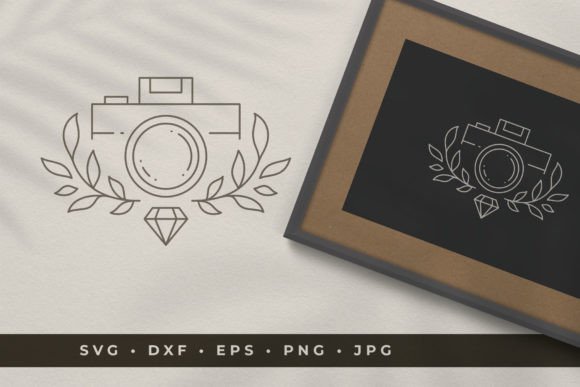
Understanding the technical foundation of these files changes how you approach project planning. Each format serves a distinct purpose, and knowing when to reach for one over another prevents rework, reduces frustration, and keeps your output consistent. The bundle includes SVG, DXF, EPS, PNG, and JPEG versions of the same floral camera line art, which means you can move between cutting machines, vector editing software, raster-based programs, and print layouts without needing to convert or recreate assets from scratch.
What the Floral Camera Line Art Design Actually Contains
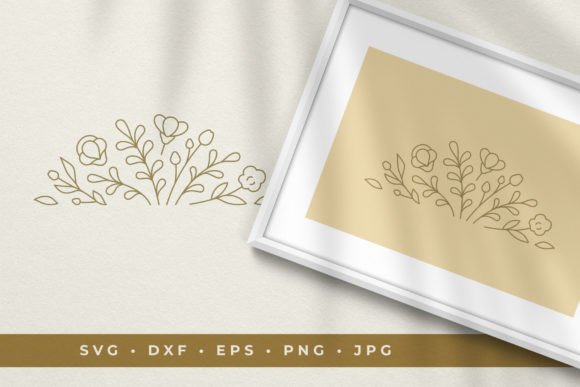
At its core, the floral camera line art design presents a camera silhouette intertwined with floral elements—leaves, petals, stems—rendered in clean monoline or slightly varied line weights depending on the version. The composition works as a standalone graphic or as a component within larger layouts. Because the lines are deliberate and uncluttered, the design scales well across different media without losing readability. This is important when you plan to use it on items as small as gift tags or as large as tote bag prints.
The six file types are not redundant; they each address different production scenarios. Having them packaged together eliminates the need to manually trace, clean up, or reformat the artwork after purchase. This matters when deadlines are tight or when you are batch-producing items for an event, shop update, or client delivery.
SVG: The Cutting Machine Standard
Scalable Vector Graphics files are built from mathematical paths rather than pixels. For anyone using Cricut, Silhouette, Brother ScanNCut, or similar devices, the SVG is your primary working file. You import it directly into your cutting software, resize without degradation, and send it to the machine. The floral camera line art SVG preserves clean cut lines, making it suitable for vinyl decals, heat transfer applications, stencil creation, and intricate paper cutting. If you are producing t-shirts with adhesive vinyl or layering cardstock for a scrapbook page, start with the SVG.
DXF: Compatibility Across Platforms
The Drawing Exchange Format originated in CAD environments but has become a bridge format for many desktop cutting applications and some laser engraving software. If your specific Silhouette Studio version struggles with SVG imports, the DXF often provides a reliable fallback. It also proves useful when collaborating with makers who use older software or niche cutting devices that prefer DXF over SVG. Keeping the DXF in your asset library ensures you are not locked into a single platform ecosystem.
EPS: Professional Print and Vector Editing
Encapsulated PostScript files remain the industry preference in many print shops and professional design workflows. Adobe Illustrator, CorelDRAW, and Affinity Designer all handle EPS natively. When you need to send the floral camera line art to a commercial printer for business cards, stationery, or packaging, the EPS file preserves vector integrity and color information that print production requires. It also embeds metadata that professional prepress software reads, reducing back-and-forth with printers about file compatibility.
PNG: Transparent Background for Digital and Hybrid Projects
The PNG format provides the floral camera line art on a transparent background at high resolution. This is your go-to for digital compositions—overlaying the design onto photographs, creating social media graphics, designing website elements, or building digital scrapbook pages. The transparency means you can layer the floral camera line art over textured backgrounds, colored blocks, or photographic images without a visible bounding box. When preparing printable invitation suites that combine digital backgrounds with the line art, the PNG gives you placement flexibility that a flat JPEG cannot.
JPEG: Quick Placement and Standard Printing
The JPEG file offers a flattened, high-quality raster version suitable for direct printing or quick preview. While it lacks the transparency of the PNG or the editability of vector formats, it serves well in situations where you need a lightweight file for proofing, sharing with clients, or inserting into word processing documents. Educators assembling classroom materials and bloggers creating printable downloads often appreciate having a ready-to-use JPEG that requires no additional software.
Integrating the Design into Real Project Workflows
The floral camera line art fits into multiple project categories without requiring you to reinvent your process each time. The key is matching the file format and preparation steps to the specific output medium.
Greeting Cards and Stationery
For card making, you can take two complementary approaches. One involves cutting the design from cardstock using the SVG file and a cutting machine, then adhering the cutout to a folded card base. This produces a dimensional, handcrafted result. The other approach uses the PNG or JPEG files to print the design directly onto cardstock, which suits larger batch runs where hand-cutting each piece would be impractical. Many designers combine both methods—printing a background texture onto the card, then layering a cut version of the floral camera line art on top with foam adhesive for depth.
Apparel and Textile Applications
When applying the floral camera line art to t-shirts, tote bags, or fabric projects, the SVG format drives the process. You mirror the design in your cutting software, cut heat transfer vinyl, weed away excess material, and press onto the garment. The line art style performs well on fabric because fine lines remain legible after pressing and washing. Test your heat settings on scrap material first; the delicate stems and petals benefit from precise temperature and pressure control to prevent shifting during transfer. For screen printing setups, the EPS file provides the clean vectors needed to burn screens accurately.
Paper Craft and Scrapbooking
Scrapbookers and paper crafters often work with multiple layers and textures. The floral camera line art can function as a focal point on a layout page, cut from specialty paper such as vellum, metallic cardstock, or textured handmade paper. Because the SVG preserves the cut path, you can scale the design to fit different page sizes—cutting a small version for a photo corner embellishment or a larger one as a border element. The PNG version also works for hybrid scrapbooking, where you print the design onto paper and then layer physical elements like ribbon or pressed flowers around it.
Typography Quotes and Wall Art
Pairing the floral camera line art with typography creates visually balanced compositions for printable wall art, posters, or social media graphics. The camera silhouette naturally frames text placed within or beneath it. Import the PNG into Canva, Photoshop, or another layout tool, position your quote text, and export for printing. The EPS version supports more precise typographic control in Illustrator or InDesign for projects requiring exact font rendering and color matching.
Organization and Asset Management for Long-Term Use
After downloading the floral camera line art bundle, immediate organization saves future searching. Create a dedicated folder structure that separates vector files from raster files. Within the vector folder, group SVG, DXF, and EPS versions. Within the raster folder, keep PNG and JPEG together. Tag or rename files with purpose hints—for instance, noting which version works best for your primary cutting machine or preferred editing software.
Backing up these files to a cloud storage service and an external drive protects against data loss. Since the bundle represents a reusable asset, treating it as part of your permanent design library rather than a one-time download yields compounding value. The floral camera line art will serve multiple projects over months or years, and organized storage means you can locate it in seconds rather than hunting through scattered download folders.
Quality Control and Consistency Across Outputs
Maintaining visual consistency as you move between formats requires a few practical checks. When converting from SVG to DXF for cutting machine compatibility, verify that all paths remain closed and that no unintended gaps appear in the cut preview. Some software versions handle certain path constructions differently; running a test cut on inexpensive material before committing to your final medium prevents wasted supplies.
For print outputs using the PNG or JPEG, check the resolution at your intended print size. The PNG typically provides sufficient pixel density for most home and small business printing needs, but scaling significantly larger than the original dimensions may introduce softness. If you need a substantially larger print, the EPS file allows infinite scaling without quality loss—export from your vector software at the exact dimensions and resolution your printer requires.
Combining the Floral Camera Line Art with Other Design Assets
The design does not exist in isolation within most projects. It sits alongside typography, color palettes, patterns, photographs, and other illustrated elements. The monoline quality of the floral camera line art allows it to pair well with sans-serif typefaces for a modern look or with serif fonts for a more classic, editorial feel. When combining with other floral elements, pay attention to line weight consistency—if the camera design uses a 2-point stroke, additional botanical elements with similar weights will create visual cohesion.
Color choices shift the mood significantly. Leaving the line art in black on a white or cream background produces a timeless, minimalist result. Printing in metallic gold or copper on dark cardstock elevates the design for wedding stationery or premium product packaging. Filling sections of the floral camera line art with watercolor textures or solid color blocks—possible with the vector formats—adds a different dimension suitable for children's products or playful branding.
Adapting the Design for Commercial and Client Work
Small business owners and freelancers frequently need assets that support both personal projects and client deliverables. The floral camera line art bundle suits product creation—such as selling finished greeting cards, art prints, or apparel—as well as service-based work where you design custom items for clients. Because the license typically covers these use cases, you can integrate the design into paid projects without originating custom artwork from scratch, saving billable hours while delivering polished results.
When presenting concepts to clients, the PNG format works well for digital mockups in proposal documents or email previews. Once a client approves the direction, you move to the SVG or EPS for production-ready work. This progression mirrors standard design workflows where low-resolution previews precede high-resolution execution, and the bundle supports each phase without format friction.
Teaching and Learning Applications
Educators and workshop facilitators find the floral camera line art useful for teaching design software, cutting machine operation, or print production basics. The single design across multiple formats provides students with a consistent reference point as they learn how vector paths differ from raster pixels, how file conversion affects output, and how to prepare digital files for physical production. Assigning a project that uses all five file formats helps learners build transferable skills that apply to their own creative work later.
Planning for Efficient Batch Production
When producing multiples—whether twelve greeting cards or fifty tote bags—efficiency in file preparation compounds. Test your settings once with the SVG in your cutting software, note the successful speed, pressure, and blade depth values, then replicate for the full batch. Organize your cutting mat layout to maximize material usage, nesting multiple instances of the floral camera line art with appropriate spacing. This practical, process-oriented mindset separates occasional crafters from those operating small creative businesses with consistent output demands.
The JPEG and PNG support batch proofing when printed as contact sheets or arranged in a document for client review. Rather than printing each variation individually, compile multiple color treatments or scale variants onto a single page and assess them side by side. Decisions made this way tend to be faster and more confident.
Long-Term Value and Reusability
A design bundle with multiple formats represents a lasting investment rather than a consumable. The floral camera line art will not expire; you can return to it for seasonal projects, new product lines, rebranding exercises, or last-minute gift creation. Because the theme—florals paired with a camera—carries timeless appeal related to photography, memory keeping, and nature, the design remains relevant across trends and shifting aesthetics.
Updating older projects with the same design in new contexts also demonstrates smart asset management. A greeting card produced two years ago can inspire a matching tote bag design today using the same SVG scaled up. The EPS file that served a business card project can later be repurposed into a website banner or packaging label. Recognizing this interconnectedness across formats and media turns a single purchase into a foundational element of your creative toolkit.