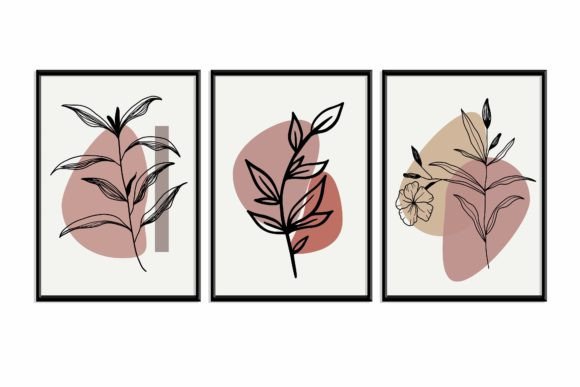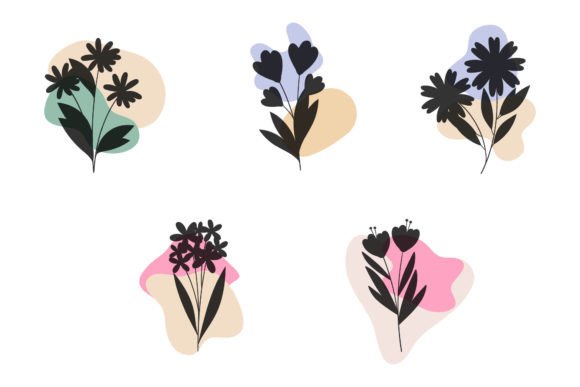
Abstract Line Art Floral: Where Minimalism Meets Botanical Beauty
There is something profoundly captivating about a single, unbroken line that curves and loops into the shape of a flower. It feels both ancient and incredibly modern. This is the world of abstract line art floral design—a creative movement that strips botanical forms down to their purest essence. Rather than relying on detailed shading, realistic textures, or vibrant color palettes, this style uses continuous strokes, negative space, and rhythmic gestures to suggest the presence of petals, leaves, and stems. The result is art that breathes, whispers, and invites the viewer to fill in the gaps with their own imagination.
In an era dominated by visual noise, the quiet confidence of abstract line art floral has resonated deeply with designers, homeowners, brand strategists, and anyone seeking a moment of visual calm. But what exactly defines this aesthetic? Why has it become so ubiquitous across digital platforms, physical products, and interior spaces? And how can you, whether a complete beginner or a seasoned creative, understand and work with it effectively? This article will walk you through everything you need to know, from foundational concepts to practical applications, while unpacking the cultural and emotional weight these delicate lines carry.
Defining the Essence: What Is Abstract Line Art Floral?
At its core, abstract line art floral is an interpretive representation of botanical subjects. Unlike botanical illustration, which aims for scientific accuracy, this style prioritizes feeling over fact. A flower might be rendered as a single looping spiral, a leaf as an elegant arc, or an entire bouquet as a tangle of intersecting paths. The "abstract" quality emerges because the subject is often simplified beyond immediate recognition—yet the organic flow of the lines triggers an instinctive association with nature.
The style typically relies on a few defining characteristics:
- Continuous line drawing: Many pieces are created without lifting the pen or stylus, resulting in a fluid, interconnected composition.
- Monochromatic palettes: Black on white is the classic choice, though cream, navy, metallic gold, and soft terracotta have gained popularity.
- Negative space: What is left undrawn matters as much as what appears on the canvas. The empty areas allow the eye to rest and the mind to complete the image.
- Organic asymmetry: Perfect symmetry is rare; instead, the lines mimic the imperfect, living quality of real plants.
Understanding these elements helps clarify why a simple scribble can feel like a finished artwork. The human brain is wired to recognize patterns and organic forms. When you see a curved line that resembles a petal, your mind fills in the botanical context, making you an active participant in the creative experience. This participatory quality is part of what makes abstract line art floral so universally appealing.
The Historical Currents That Shaped the Style
While the current popularity of abstract line art floral might seem tied to Instagram feeds and contemporary branding, its roots stretch much deeper. Early 20th-century modernists like Picasso and Matisse famously explored the power of the single line. Matisse's late-career cut-outs and flowing ink drawings reduced the human figure and botanical forms to their most essential contours. Around the same time, Japanese sumi-e ink painting emphasized the beauty of a single brushstroke to convey the spirit of bamboo, orchids, or cherry blossoms, rather than their exact appearance.
In the mid-20th century, minimalist art movements continued to champion the idea that less could indeed be more. By stripping away ornamentation, artists discovered a purer form of communication. This philosophical undercurrent feeds directly into today's abstract line art floral trend, where a single unbroken line on a large canvas can anchor an entire room's aesthetic. The digital age accelerated the style's reach, as vector software made it possible to create infinitely scalable, perfectly smooth line work that could adorn everything from smartphone wallpapers to billboard advertisements without losing fidelity.
It is important to recognize that what appears effortlessly simple often carries centuries of artistic inquiry into the relationship between line, form, and meaning. The contemporary designer drawing a floral SVG on a tablet is part of a lineage that includes Zen calligraphers and modernist pioneers.
Why Abstract Line Art Floral Matters in Modern Visual Culture
The significance of this style extends far beyond its decorative appeal. In a saturated media environment, abstract line art floral offers a kind of visual quietude that many people unconsciously crave. It does not shout for attention; it invites a pause. This explains its widespread adoption in wellness branding, mindfulness apps, yoga studios, and spa interiors. The gentle, flowing lines mirror the qualities of calm breathing and natural growth, reinforcing messages of balance and organic well-being.
From a design psychology perspective, the style also communicates sophistication without pretension. Because the imagery is abstract, it feels open to interpretation and therefore less prescriptive than a photorealistic flower. A luxury skincare brand might use a delicate line-art peony to suggest natural ingredients and refined elegance simultaneously. A tech startup might incorporate abstract floral line work into its branding to soften a purely digital identity with a human, organic touch. The versatility of meaning is one of the style's greatest assets.
Moreover, in business and marketing contexts, abstract line art floral assets are incredibly practical. Their simplicity ensures they reproduce beautifully across mediums—from embossed business cards to large-scale wall murals—without losing impact. A single digital file, such as a 1920px by 1280px vector graphic, can be adapted to countless applications while maintaining crisp, professional quality. This scalability makes the style a favorite among entrepreneurs, content creators, and DIY enthusiasts who need flexible, high-impact visuals.
Practical Applications Across Creative Fields
To truly appreciate the reach of abstract line art floral, it helps to explore concrete examples of where it shows up and how it functions in each context.
Interior Design and Home Decor
Line art floral prints have become a staple of modern interiors. A gallery wall featuring a series of framed abstract botanical prints can tie together a room's color scheme while adding an air of curated artistry. Because the drawings are typically monochromatic, they pair effortlessly with Scandinavian minimalism, Japandi aesthetics, or even eclectic bohemian spaces. Beyond framed prints, the motif appears on throw pillow covers, ceramic vases, woven blankets, and wall decals. The subtlety of the line work ensures that even large-scale applications—such as a floor-to-ceiling wall mural—feel airy rather than overwhelming.
Branding and Logo Design
For businesses that want to convey natural ingredients, handcrafted quality, or a personal touch, an abstract floral line art logo can communicate all of this in a single mark. Florists, wedding planners, organic skincare lines, and life coaches frequently incorporate the style. The continuous line suggests connection, continuity, and flow—concepts that resonate with brands focused on relationships, growth, and authenticity. Even established corporations have adopted line art floral patterns for seasonal packaging or limited-edition product lines, recognizing the style's power to humanize their visual identity.
Stationery and Event Design
Wedding invitation suites, save-the-date cards, and event menus have embraced abstract line art floral with enthusiasm. The delicate lines evoke romance without the weight of overly ornate traditional florals. A simple line-drawn wreath on a thank-you card feels personal and heartfelt. Because the style leaves so much white space, it works beautifully with modern typography, allowing the text to breathe and the overall composition to feel balanced and intentional.
Digital Content and Social Media
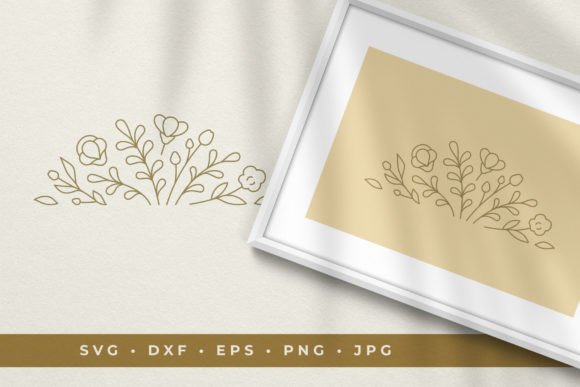
On platforms like Instagram and Pinterest, abstract floral line art often serves as a recognizable visual thread that ties a creator's content together. Blog post headers, quote graphics, digital planners, and highlight covers benefit from the organic, hand-drawn feel the style provides. It counterbalances the hyper-polished, overly saturated imagery that dominates many feeds, offering a moment of visual rest that keeps audiences engaged. Digital creators who sell printable art or design assets frequently offer abstract line art floral bundles—files in AI, EPS, SVG, JPG, and PNG formats—so that buyers can easily edit and incorporate the designs into their own projects.
Fashion and Textiles
Embroidered line art flowers on a denim jacket, a silk scarf printed with continuous botanical lines, or a minimalist tote bag featuring a single abstract bloom—these applications demonstrate how the style translates into wearable and functional art. The simplicity of the line work means it can be stitched, printed, or woven without distortion, making it ideal for textile designers who need clean, scalable motifs.
Common Misunderstandings and How to Navigate Them
Despite its apparent simplicity, abstract line art floral is sometimes misunderstood in ways that can lead to frustration for newcomers and professionals alike. Let's address a few of these head-on.
Misconception 1: "It is just a quick, careless doodle." While the style can appear spontaneous, the most impactful pieces often involve deliberate practice and a trained eye. Artists study the underlying structure of real flowers—the way petals overlap, how stems bend, where leaves attach—in order to abstract them convincingly. A continuous line drawing that captures the essence of a rose in one fluid motion requires understanding the subject deeply before simplifying it. The ease of the final line belies the hours of observation and experimentation behind it.
Misconception 2: "All abstract floral line art looks the same." In reality, the style encompasses immense variety. Some artists favor thick, confident strokes with variable pressure that echo Japanese calligraphy; others create whisper-thin, precise lines that feel architectural. Some compositions are dense and intricate, while others leave vast expanses of untouched canvas. The emotional tone can range from playful and whimsical to solemn and meditative. Recognizing these nuances helps consumers and designers choose pieces that genuinely resonate with their intended mood rather than settling for generic options.
Misconception 3: "You need expensive software or advanced skills to create or use it." One of the most liberating aspects of abstract line art floral is its accessibility. A meaningful piece can begin with a simple pen and a sheet of paper. For those working digitally, free and low-cost applications support vector drawing, allowing even beginners to experiment with smoothing tools and pressure sensitivity. Pre-made digital files in formats like SVG, AI, EPS, JPG, and PNG—such as those included in thoughtfully designed product bundles—enable users with no drawing experience to incorporate professional-quality line art into their websites, printed materials, and personal projects. The 1920px by 1280px canvas size provides a generous resolution that accommodates both digital display and print reproduction.
Working with Abstract Line Art Floral Digital Assets
For designers, small business owners, and hobbyists who purchase digital line art files, understanding the purpose of each included format unlocks the full potential of the asset. Here is a breakdown of what you might find in a typical product download and how each file type serves a distinct function:
- AI File (Adobe Illustrator): This native vector format is fully editable in Illustrator. You can change stroke weights, adjust anchor points, recolor individual elements, and scale the artwork infinitely while preserving sharpness. It is the ideal choice for professional designers who need to deeply customize the artwork for branding projects or complex layouts.
- EPS File (Encapsulated PostScript): A universal vector format compatible with various design software, including older versions of Illustrator, CorelDRAW, and Affinity Designer. EPS files maintain scalability and are excellent for print production and cross-platform sharing.
- SVG File (Scalable Vector Graphics): Perfect for web use, SVG files can be embedded directly into website code, used with cutting machines like Cricut and Silhouette, and edited in free software like Inkscape. Their small file size and infinite scalability without quality loss make them a favorite for digital crafters and web developers.
- JPG File: A flattened, raster image at 1920px by 1280px. Ideal for quick previews, social media posts, blog graphics, and digital frames. Because it is not editable beyond basic resizing and cropping, a JPG is best used when you need a ready-to-go image without modification.
- PNG File: Also a raster format but crucially supporting transparent backgrounds. A PNG of an abstract floral line drawing can be placed over colored backgrounds, photographs, or textured surfaces without an unsightly white box around it. This makes it indispensable for creating layered digital collages, product mockups, and presentation slides.
Having all five formats in a single purchase ensures flexibility. You might use the AI file to develop a full brand identity, the SVG to cut vinyl decals, the JPG to post on your blog, and the PNG to overlay on a website banner. The combination covers nearly every creative workflow, from print to digital, from professional to personal. The "easy to edit and use in your designs" promise that accompanies such products is genuinely meaningful when you understand how each format fits into your toolkit.
Looking Forward: The Enduring Appeal of Floral Abstraction
Trends in art and design rise and fall, but the human connection to nature and the power of the drawn line are not passing fads. Abstract line art floral represents a synthesis of timeless impulses: the desire to capture botanical beauty, the appreciation for skillful line work, and the need for visual tranquility in a cluttered world. As artificial intelligence and hyper-realistic digital rendering continue to advance, the humble, hand-drawn quality of abstract line art may actually grow more precious—a reminder that human intention, imperfection, and restraint hold their own unique value.
Whether you are selecting a piece of art for your living room wall, developing a brand identity that communicates growth and authenticity, or simply exploring a new creative hobby, abstract line art floral offers a welcoming entry point. Its principles are simple enough for a beginner to grasp in an afternoon, yet deep enough to sustain a lifetime of artistic exploration. That balance—between simplicity and depth, between the figurative and the abstract—is precisely what makes this style feel so alive. In a single, unbroken line, there exists the memory of a petal, the suggestion of a stem, and an open invitation to see the natural world through a quieter, more contemplative lens.
As you integrate abstract line art floral into your own environment or projects, remember that its strength lies not in what is explicitly shown, but in what is gently implied. The empty spaces, the incomplete forms, and the flowing, open-ended strokes are not shortcomings—they are intentional choices that honor the beauty of suggestion. And in a world that often insists on filling every silence and every blank canvas, choosing to leave some things unsaid, undrawn, and unfinished can be its own form of creative wisdom.