What Makes a Green Floral Background a Versatile Creative Asset for Digital and Print Projects
Finding design elements that move smoothly between screen-based work and physical products saves hours of reformatting and frustration. A well-constructed Green Floral Background built from watercolor illustration techniques offers that kind of flexibility. When the artwork arrives as a layered arrangement of hand-painted botanical elements scanned and refined for modern workflows, it brings something different from purely vector-generated floral patterns. The organic pigment bleeding, subtle petal translucency, and natural stem curvature create a quality that flat digital brushes rarely replicate.
This particular illustration package addresses a common pain point among designers, small business owners, and content creators—the need for one source file that adapts to wildly different end uses without compromising visual integrity. The inclusion of three distinct file formats signals an understanding of how creative professionals actually work across software ecosystems and production pipelines.
Understanding the Core Illustration and Its Composition
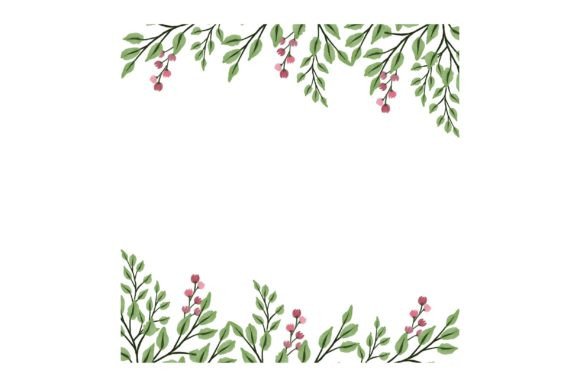
The centerpiece of this product is an arrangement of watercolor florals rendered in green tones against a complementary background. Unlike stock photography or clip art, watercolor illustrations carry inherent texture variance—each leaf and petal shows the characteristic pooling and drying patterns of pigment on paper. This means the asset looks less manufactured and more like something custom-commissioned for your project. The green palette ranges from soft sage and olive to deeper emerald, providing natural depth without competing for attention against overlaid typography or other design elements.
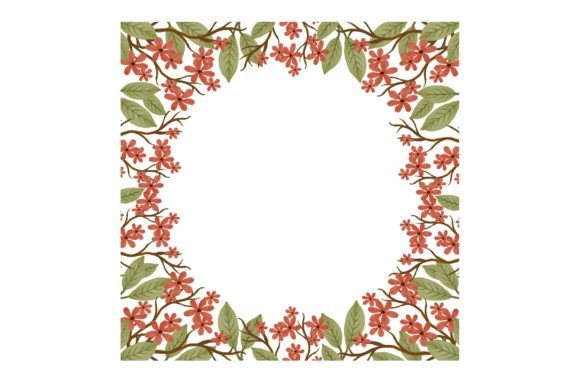
The arrangement style suggests a botanical border or clustered wreath-like composition, which makes it suitable for framing content or creating focal points. The background element adds versatility—you can use the full composition as a complete scene or isolate portions depending on your software capabilities and project requirements.
What Sets Watercolor Illustration Apart from Generic Floral Vectors
Standard vector florals often look precise but sterile. Watercolor introduces controlled imperfection. The subtle color transitions, occasional pigment blooms, and soft edges create warmth that appeals to audiences in lifestyle, wellness, wedding, and boutique branding contexts. For a Green Floral Background to work effectively, the scanning and digitization process must preserve those nuances. Based on the specifications provided, the source artwork appears to have been professionally digitized and saved in formats meant to retain high-resolution detail.
File Format Breakdown and Practical Implications
The package includes three standard formats, each serving different production needs. Understanding when to use each format helps avoid quality loss and workflow bottlenecks.
- .EPS 10 format: The Encapsulated PostScript file remains the backbone of scalable design work. You can open it in Adobe Illustrator, CorelDRAW, Affinity Designer, and many other vector editing applications. This format allows you to resize the illustration indefinitely without pixelation—critical for large-format printing like banners, signage, or fabric yardage. The EPS container also preserves editable elements if the original artwork was constructed with layers or separate objects, which matters when you need to rearrange floral components or extract individual elements for custom compositions.
- .JPG format: The universal raster image standard. High-resolution JPG files work immediately in word processors, presentation software, social media schedulers, and basic photo editors. This format suits quick mockups, blog post headers, digital invitation backgrounds, and any scenario where file size and broad compatibility take priority over editing flexibility. The compression does mean some texture detail may be lost compared to lossless formats, but for most screen-based applications the difference proves negligible.
- .PNG format: The transparency-supporting raster format matters enormously for overlay work. If the floral arrangement comes with a transparent or semi-transparent background, you can layer it directly onto colored cardstock designs, product mockups, website sections, or composite images without creating clipping paths. PNG preservation of fine watercolor edges—including soft, fading pigment transitions—makes it the preferred format for digital collage and UI decoration where the illustration must integrate seamlessly with existing backgrounds.
Evaluating Quality and Production Standards
Several technical factors determine whether a digitized watercolor illustration performs reliably across projects. Resolution remains the most basic benchmark—the JPG and PNG files should deliver at minimum 300 DPI at reasonable print dimensions. Lower resolutions lead to visible artifacting when printed on physical products like mugs, fabric, or greeting cards. The EPS format bypasses resolution concerns entirely for vector-compatible elements, but any embedded raster textures within the EPS must still meet printable standards.
Color consistency across formats presents another evaluation point. A professionally prepared Green Floral Background should maintain consistent green tones whether you open the EPS in Illustrator, the JPG in Photoshop, or the PNG in Canva. Color shifts between CMYK and RGB color spaces can cause unexpected results—greens are particularly susceptible to shifting toward muddy brown tones when converted improperly for print. Test prints or soft-proofing help catch these issues before committing to production runs.
Edge Handling and Masking Quality
For the PNG format especially, the quality of transparency masking around complex watercolor edges reveals the production care taken. Soft brush edges with gradual opacity require sophisticated alpha channel handling. Poor masking leaves harsh cutout lines or white halos that become obvious when placed over colored backgrounds. This matters greatly for mug designs, t-shirt transfers, and digital invitations where the floral arrangement overlays a solid or gradient background.
Real-World Applications and Use Cases
The stated use cases—wallpapers, wreaths, invitations, cards, fabric, mugs, and tees—cover a logical spectrum, but the practical applications extend further. Understanding how the asset performs in each context helps assess its value relative to your specific needs.
Stationery and Event Design
Wedding invitations, save-the-dates, bridal shower cards, and thank-you notes benefit enormously from watercolor floral framing. The green palette works across seasons, feeling appropriate for spring garden themes, summer outdoor celebrations, and even winter events when paired with complementary colors. The arrangement style as a wreath or border naturally draws the eye toward central text, which supports clear information hierarchy on invitation layouts.
Branding and Marketing Collateral
Small businesses in wellness, organic products, boutique retail, floristry, and eco-conscious niches may find the illustration aligns with brand aesthetics that emphasize natural, handmade, or artisanal qualities. Using the EPS file, you can incorporate floral elements into logo lockups, business card backgrounds, packaging labels, and social media templates while maintaining crisp output at any scale.
Product Decoration and Print-on-Demand
For entrepreneurs using print-on-demand services, having high-resolution files in multiple formats reduces the back-and-forth of reformatting artwork for different product types. The JPG may work perfectly for a phone case or notebook cover, while the PNG proves essential for a mug design that requires the floral pattern to wrap without a visible rectangular bounding box. Fabric printing for custom apparel or home textiles demands the vector scalability of EPS to avoid pixelation on larger surface areas.
Digital Content and Screen-Based Projects
Website hero sections, blog post featured images, digital planner decorations, and virtual backgrounds all represent valid uses for raster formats. The green botanical aesthetic aligns with current design trends favoring calming, nature-inspired visuals. Content creators producing video thumbnails, podcast cover art, or Pinterest pins can layer the PNG version over branded color blocks for consistent, professional-looking assets without hiring custom illustration work for every piece.
Audience Fit and Practical Considerations
This type of asset appeals most to users who value production-ready artwork over the learning curve of creating original watercolor illustrations. Professionals who regularly produce client-facing materials under time constraints—graphic designers, event planners, marketing coordinators—stand to benefit from having the files ready to drop into projects. Small business owners handling their own design work in tools like Canva or PicMonkey can use the JPG and PNG formats without specialized vector software.
Educators creating classroom materials, bloggers designing their own media kit elements, and serious hobbyists producing handmade goods for online marketplaces all represent fitting user profiles. The green floral theme offers enough neutrality to work across multiple projects without becoming overly tied to a single seasonal or stylistic niche.
Potential Limitations Worth Noting
No single illustration set covers every creative need. The fixed arrangement means you receive a specific composition—if your project requires individual floral stems for custom bouquets or scattered petal patterns, you may need to invest time extracting elements from the EPS file if the artwork was constructed with grouped objects. Some EPS files flatten all elements into a single compound path, which limits decomposition options.
The watercolor style, while broadly appealing, may not suit brands requiring geometric precision, minimalist austerity, or photographic realism. Additionally, the green monochromatic palette, though versatile, means you cannot easily shift the flowers to corals, blues, or other color schemes without significant recoloring work that may compromise the natural watercolor texture. The inclusion of only one colorway means users needing varied palettes must either accept the green tones or pursue additional editing.
Commercial licensing terms also warrant attention. While the file formats suggest production readiness, the specific license attached to the illustration determines whether you can use it on products for resale, in client work, or for large-scale commercial printing. Verify that the usage rights align with your intended applications before building the asset into income-generating projects.
Making an Informed Decision for Your Workflow
A Green Floral Background illustration package earns its place in a resource library when it fills a recurring need with minimal friction. Consider how often you reach for botanical framing elements in your work, what file formats your current tools accept comfortably, and whether the watercolor aesthetic aligns with projects in your pipeline. Trial runs with the JPG across a few typical layouts can quickly reveal whether the composition and scale work for your most common output sizes.
For those whose work regularly involves invitation suites, branded stationery, product mockups, or nature-themed content, the combination of vector scalability and raster convenience bundled together offers pragmatic value. The three-format approach reduces the need for conversion work or separate asset purchases. When the digital files are prepared with attention to resolution, color fidelity, and edge quality, the illustration can serve reliably across years of varied projects without feeling overused—provided you rotate it among other assets in your collection to keep your visual output fresh.