What Makes a Decorative Floral Elements Set a Practical Asset for Modern Design Work
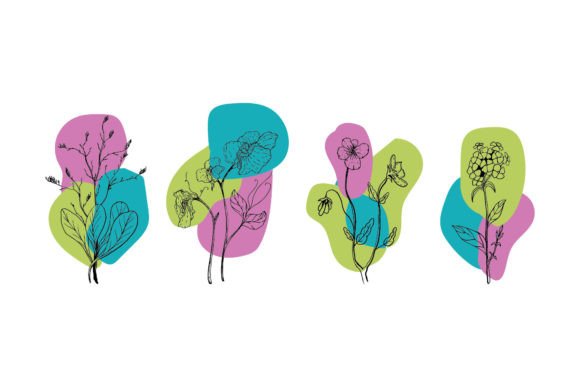
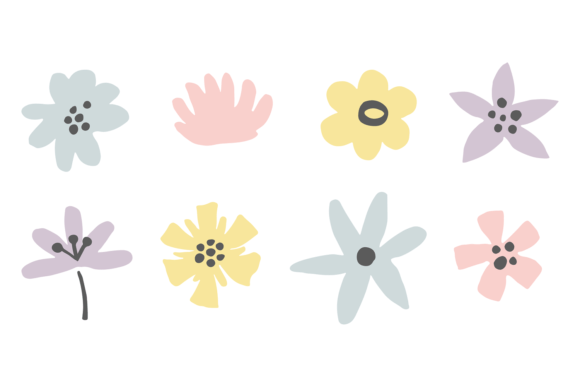
Every designer, marketer, or small business owner eventually faces the same challenge: finding botanical decorative elements that look intentional rather than slapped on. A Flowers Set of decorative floral elements isolated on white backgrounds bridges the gap between rushed stock imagery and custom illustration work that most timelines and budgets cannot accommodate. These collections, typically delivered in EPS, JPG, SVG, and transparent PNG formats, serve a specific purpose—they provide clean, ready-to-use floral components that integrate into prints, patterns, branding collateral, and digital layouts without the friction of background removal or format conversion.
The value proposition is straightforward but worth examining carefully. Not all floral asset packs are created with the same attention to line weight, scalability, stylistic cohesion, or licensing clarity. Understanding what separates a genuinely useful set from a folder of miscellaneous flower graphics saves time, money, and the quiet frustration of discovering limitations mid-project.
Understanding the File Format Ecosystem
A well-prepared Flowers Set. Decorative Floral Elements typically ships with multiple format options, and each serves a distinct workflow requirement. The inclusion of EPS, JPG, SVG, and transparent PNG is not a marketing checkbox—it reflects an understanding that print designers, web developers, and hybrid creators operate in different technical environments.
EPS files remain the backbone of print production. They preserve vector paths, meaning a single floral element can scale from a business card corner accent to a large-format wall graphic without degradation. Professional print shops expect this format, and designers who routinely prepare files for offset printing, screen printing, or vinyl cutting rely on EPS as their source of truth.
SVG files fill a similar role for digital and web applications. Unlike EPS, SVG integrates directly into HTML documents, making it the preferred format for web designers, UI developers, and anyone working with responsive layouts. The ability to manipulate SVG properties through CSS—changing colors, adjusting stroke widths, or animating individual petals—gives this format a flexibility that raster alternatives cannot match.
Transparent PNG files address immediate drag-and-drop needs. When you need floral elements placed over colored backgrounds, photographic compositions, or layered social media graphics, transparent PNGs remove the step of manual background isolation. The resolution matters here; a set containing only low-resolution PNGs limits print utility, while high-resolution options extend usability into physical products.
JPG files, though less versatile due to their flat white backgrounds and lossy compression, remain useful for quick previewing, mockup placement, and scenarios where file size constraints override the need for transparency.
The practical takeaway: a floral elements set that provides all four formats respects the reality that creative professionals rarely work exclusively in one medium. A single project might require vector source files for a logo variation, transparent PNGs for a website hero image, and high-resolution JPGs for a product catalog. Having these available from the start eliminates conversion headaches later.
Stylistic Cohesion and the Problem of Mismatched Florals
The most underappreciated quality in a decorative floral elements collection is internal consistency. Many designers have experienced the disappointment of opening a supposedly comprehensive flower set only to find that the rose and the daisy clearly originated from different illustrators, different eras, or different aesthetic philosophies. When botanical elements sit together in a pattern or layout, inconsistencies in line quality, shading approach, detail density, and stylistic intention become immediately visible—and they communicate carelessness.
A thoughtfully produced Flowers Set maintains uniform visual language across every element. Whether the style leans toward delicate line art, bold botanical illustration, vintage woodcut interpretation, or modern minimalist geometry, the cohesion matters more than the quantity of flowers included. Ten well-matched elements outperform fifty mismatched ones in almost every real-world application.
This cohesion becomes especially critical when creating repeating patterns for textiles, wrapping paper, stationery, or surface design. Pattern repeats amplify small inconsistencies; a single flower with slightly heavier stroke weight than its neighbors creates a visual rhythm disruption that the eye registers even when the brain cannot immediately identify the cause.
Isolation on White: Why Background Choice Matters
The specification that decorative floral elements are isolated on white background deserves more attention than it typically receives. This is not merely a presentation preference—it has direct consequences for usability and file preparation workflow.
Elements photographed or rendered against white backgrounds simplify the selection and extraction process when designers need to isolate individual flowers for compositing. Even with transparent PNGs provided, working files sometimes require adjustments, variations, or partial extractions that benefit from clean subject separation. White backgrounds photographed under consistent lighting conditions produce cleaner edges than those shot against gray, cream, or patterned surfaces.
For print production specifically, elements on white backgrounds help designers and prepress technicians evaluate color accuracy and contrast without the influence of surrounding environmental tones. This becomes particularly relevant when floral elements will print on white substrates like paper, cardstock, or fabric, where the final presentation closely mirrors the asset preview.
However, a limitation worth noting: white-background JPGs look clean in isolation but require extra steps when placed over non-white backgrounds. The white field behind the flowers does not disappear automatically, which is precisely why transparent PNG and vector formats exist as companions. Users who plan extensive compositing work should verify that the PNG and vector options are genuinely usable before relying on a set for complex layouts.
Who Gains the Most from a Quality Floral Elements Set
The audience for decorative botanical assets spans further than many assume. Understanding where the practical fit is strongest helps potential users evaluate whether a particular set matches their needs.
Print designers and stationery creators form an obvious core audience. Wedding invitation suites, greeting cards, menu designs, and event collateral all benefit from floral decorative elements that can be recolored, rearranged, and scaled to fit specific layouts. The ability to pull individual flowers from a cohesive set rather than commissioning custom illustrations for each project dramatically reduces production timelines.
Brand identity designers increasingly incorporate botanical elements into logo marks, submarks, and visual identity systems for businesses in wellness, hospitality, beauty, organic products, and lifestyle sectors. A vector floral element that can be simplified, geometrically refined, or combined with typography provides a starting point that many identity projects would otherwise require custom illustration budgets to achieve.
Product-based entrepreneurs and small business owners selling through platforms like Etsy, Shopify, or Amazon Handmade often handle their own packaging design, social media content, and marketing materials. For someone managing these responsibilities without formal design training, a well-organized floral elements set with transparent PNGs eliminates the technical barrier of background removal while providing professional-looking botanical accents.
Surface pattern designers use decorative floral elements as building blocks for larger repeating designs. When vector formats are available, individual flowers can be rotated, mirrored, recolored, and combined into complex compositions destined for fabric printing, wallpaper, gift wrap, or home decor products.
Bloggers, content creators, and educators creating digital products—workbooks, lead magnets, presentation decks, course materials—often need decorative elements that elevate the visual polish of their deliverables without requiring extensive design time. Transparent PNG florals fill this role efficiently.
Evaluating Technical Quality Before Purchase
Practical experience suggests several quality indicators that separate professionally produced floral element sets from hastily assembled collections. These observations apply whether the set is free or paid, though paid sets reasonably invite higher expectations.
Vector path cleanliness matters enormously for EPS and SVG formats. Well-constructed vector flowers contain smooth bezier curves, logical anchor point placement, and consistent path direction. Poorly constructed vectors reveal themselves through jagged curves at high magnification, excessive anchor points that complicate editing, and path overlaps that create unexpected results when applying fill colors or stroke modifications.
Resolution appropriateness for PNG files should match stated use cases. A set marketed for print applications should include PNGs at 300 DPI minimum at reasonable physical dimensions. Sets intended exclusively for digital use may reasonably offer lower resolutions, but this limitation should be transparent rather than discovered after purchase.
Color space and profile consistency affects print production outcomes. RGB files without embedded profiles may display differently across screens and convert unpredictably to CMYK for offset printing. Professional sets intended for print typically include CMYK-compatible options or at minimum use sRGB profiles consistently.
Licensing clarity is perhaps the most overlooked quality factor. A decorative floral elements set may be technically excellent but legally unusable for intended purposes if the license restricts commercial applications, limits the number of end products, prohibits use in trademarked designs, or imposes attribution requirements inconsistent with the user's workflow. Sets that clearly state whether elements can be used in logo design, products for resale, or print-on-demand merchandise provide the transparency that professional users need.
Practical Integration into Existing Workflows
How floral elements actually integrate into daily design work differs by software environment. In Adobe Illustrator, EPS and SVG files open natively, allowing individual flowers to be pulled apart, recolored through global swatches, and combined into custom compositions. The true efficiency gain comes when a designer builds a project-specific library of frequently used floral motifs from a single cohesive set, reducing the need to source new elements for each variation of a design.
In Adobe Photoshop, transparent PNGs import as smart objects when placed as linked files, preserving the ability to scale non-destructively and apply layer effects like drop shadows, color overlays, or texture treatments. Designers building digital mockups or photo compositions often maintain a folder of high-resolution floral PNGs organized by style category for rapid prototyping.
For Canva users and those working in browser-based design tools, SVG and transparent PNG compatibility varies by platform but generally improves with each update cycle. Transparent PNGs remain the most universally compatible format for non-professional design environments, and a set that includes well-organized PNG files with descriptive filenames reduces the friction of searching through asset libraries.
Web developers implementing SVGs inline benefit from the smallest possible file sizes and the ability to animate or style elements through CSS. Clean SVG code without unnecessary metadata, editor-specific markup, or embedded raster data produces better page performance and easier maintenance.
Realistic Limitations and When to Look Elsewhere
No single asset set solves every design problem, and decorative floral elements are no exception. Sets designed with a particular stylistic approach—hand-drawn whimsical florals, for example—will not suit projects requiring photorealistic botanical accuracy or ultra-minimalist geometric interpretations. The stylistic range within any single set is inherently constrained by the need for internal cohesion, which is simultaneously a strength and a limitation.
Additionally, sets containing exclusively isolated individual flowers require more assembly time for complex compositions than pre-built floral arrangements or wreaths. Designers working under extremely tight deadlines may prefer assets that come pre-composed, even at the cost of reduced customization flexibility. Understanding this trade-off helps match the asset type to the project timeline.
For projects requiring exclusive, never-before-used floral artwork—such as a flagship brand identity or a book cover for a major publisher—even the best stock floral elements carry the risk of appearing in other designs. Custom illustration remains the appropriate route when absolute uniqueness is a non-negotiable requirement. Stock elements serve the vast middle ground of projects where professional quality and practical efficiency outweigh the need for complete artistic exclusivity.
Making an Informed Choice
Selecting a Flowers Set. Decorative Floral Elements that genuinely serves your work requires looking past attractive preview images to the structural qualities that determine day-to-day usability. Verify format availability for your specific software environment. Check whether the stylistic approach aligns with your brand or project aesthetic across multiple elements, not just the hero previews. Confirm that licensing terms permit your intended commercial applications without ambiguity. And whenever possible, test a sample element at the scale and in the context where it will actually be used before committing to a full purchase.
The best floral asset collections disappear into your work—viewers notice the cohesive, polished result without identifying the individual components that built it. When botanical decorative elements integrate this seamlessly, they justify their place in a professional creative toolkit not through novelty but through quiet, repeated usefulness across projects that span months or years. That long-term practical value, far more than the initial visual appeal, determines whether a floral elements set earns its keep in a working designer's resource library.