Understanding the Appeal and Practical Use of a Watercolor Rose Floral Frame Bouquet
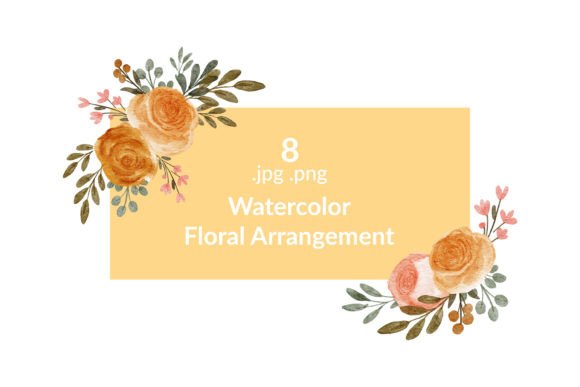
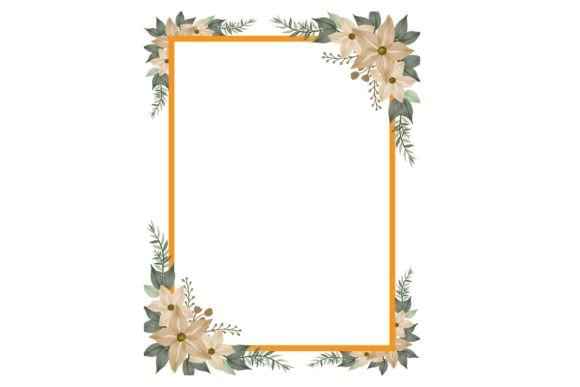
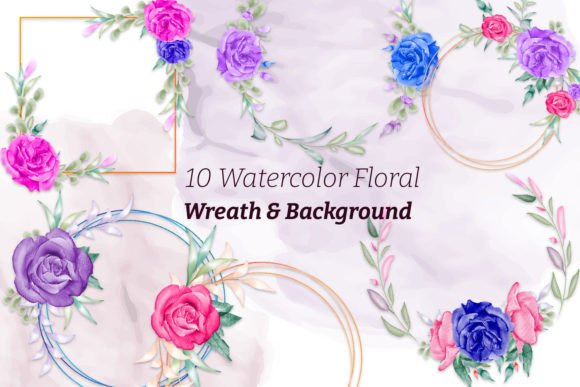
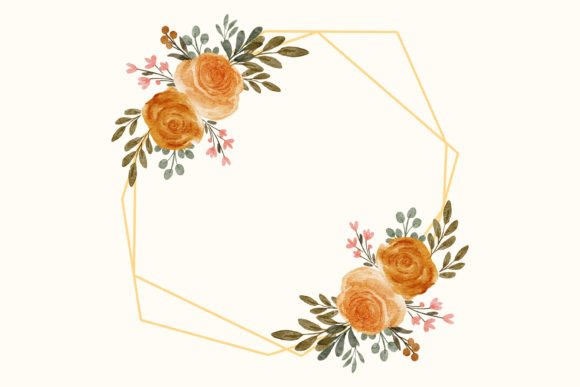
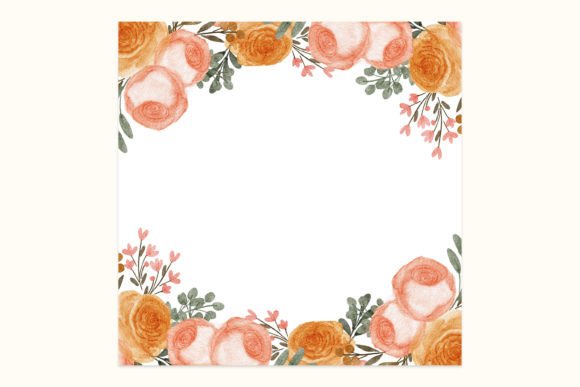
Design resources come in many forms, but few strike the balance between soft artistry and functional framing quite like a watercolor rose floral frame bouquet. At its core, this asset combines hand-painted or digitally rendered watercolor roses with an integrated frame structure, often circular, oval, or softly geometric, that wraps around the floral elements to create a border suitable for text, announcements, or brand elements. What distinguishes this type of design from a simple floral illustration is the intentional negative space at the center or along the edges—space that invites personalization without overpowering the artwork itself.
The typical package for this kind of resource includes the digital files in both .JPG and .PNG formats, each rendered at a substantial 2500 px by 2500 px resolution. That square proportion and high pixel density matter more than some buyers initially realize. A 2500 by 2500 canvas provides enough detail for crisp printing at standard invitation sizes, social media graphics that hold up on retina screens, and even modest print enlargements without visible degradation. The dual-format delivery also speaks to different use cases: .PNG files preserve transparency behind the frame, allowing the bouquet to float over colored backgrounds or photographs, while .JPG files offer a flattened, white-background version that can be easier to drop into straightforward projects.
What Sets a Watercolor Rose Floral Frame Apart from Other Botanical Designs
It helps to compare this style against the broader category of floral frame graphics. Vector-based rose frames, for example, offer infinite scalability and crisp lines, but they often lack the organic texture, pigment bloom, and subtle color bleeding that give watercolor its warmth. Photography-based rose wreaths provide realism, yet they can feel heavy and distract from the text they are meant to frame. The watercolor approach occupies a middle space—soft enough to feel romantic and handcrafted, structured enough to function as a readable frame.
Another distinction lies in the color palette. Watercolor roses tend toward muted blush, dusty mauve, soft coral, sage-tinged greenery, and gentle ochre—tones that blend well with wedding stationery, baby shower invitations, wellness branding, or personal blog headers. In contrast, vector florals in flat illustration style may lean brighter or more saturated, which suits children's content or bold marketing but can clash with understated aesthetics. The watercolor medium naturally introduces variation in opacity and hue, so no two digital "petals" appear exactly identical, even within the same file. This organic variability is part of the draw.
The Role of File Format Choice in Creative Projects
When a resource includes both JPG and PNG files at matching 2500 px dimensions, the formats serve complementary purposes rather than redundant ones. Understanding this distinction can shape how and where someone uses the watercolor rose floral frame bouquet effectively. The PNG version, with its transparent background, allows the roses and greenery to sit directly against any surface—cream cardstock, a pastel gradient, or even a subtle texture like linen or watercolor paper. Designers placing the bouquet into Canva, Photoshop, or Affinity projects will nearly always reach for the PNG first because it offers layout flexibility that a flattened JPG cannot match.
However, the JPG file has its place too. It produces a smaller file size, which can be useful for quick uploads to certain platforms, and its solid background eliminates any concern about transparency rendering incorrectly in older software. Some online printing services also prefer JPG submissions. Having both formats on hand means the creator does not need to convert or compromise on quality when moving between digital and print workflows. The high resolution across both types means a 2500 x 2500 pixel file at 300 DPI prints at roughly 8.3 inches square—ample for most invitations, greeting cards, or square-format social graphics that need to remain sharp on high-density displays.
Comparing Printed and Digital Use Cases
The watercolor rose floral frame bouquet serves distinct purposes depending on whether it is headed to a physical printer or remaining on screen. For printed wedding suites, the 2500 px resolution supports clean output at common invitation sizes like 5x7 inches or 6x6 inches when the frame is scaled appropriately. A subtle challenge arises if someone needs to enlarge the design beyond its native print dimensions—up to 12x12 inches, for instance. At that scale, some softening may occur, though the watercolor style often masks minor interpolation better than crisp line art would.
For digital use, the PNG format shines in email headers, website announcement bars, Instagram Story templates, and Pinterest pins. Because transparency is preserved, the bouquet can overlay photography without a harsh white rectangle boxing it in. A blogger creating a featured image for a seasonal recipe post might use the watercolor rose floral frame bouquet to encircle the title, letting the roses soften the visual perimeter while keeping the central image legible. This dual-readiness for print and digital environments is one reason these assets appeal across such a wide age range, from twenty-something DIY brides to fifty-year-old small-business owners refreshing their visual identity.
Evaluating Compatibility with Common Design Software
Not every high-resolution asset behaves predictably across all tools. The watercolor rose floral frame bouquet, delivered in universally supported JPG and PNG formats, avoids the compatibility issues that sometimes plague EPS, AI, or SVG files. Someone using free browser-based editors does not need to worry about vector import glitches or missing fonts built into proprietary formats. The tradeoff is that raster files like these cannot be infinitely scaled without some quality loss, but 2500 px square is generous enough that the practical ceiling rarely becomes an issue for the kinds of projects these frames typically adorn.
For users working in professional tools like Adobe Illustrator or InDesign, the PNG version layers cleanly over vector backgrounds, and the high resolution provides more than enough data for CMYK conversion at standard print sizes. One consideration worth noting: watercolor artwork often contains subtle semi-transparent areas at the edges of brushstrokes. The PNG format preserves this partial transparency, whereas the JPG will bake those areas into a solid white or whatever background color is chosen during export. This nuance affects how the frame integrates with textured paper stocks or non-white backdrops.
When This Style Aligns Well with Project Goals
Certain project types benefit disproportionately from the gentle framing effect of watercolor roses. Save-the-date cards, bridal shower invitations, and anniversary announcements align naturally with the romantic language of roses, while the frame structure helps contain the text so it does not feel adrift in white space. The softness of watercolor also suits sympathy and condolence cards, where a less structured, more organic border expresses warmth without feeling overly designed.
Beyond stationery, the aesthetic fits wellness and lifestyle branding—think yoga retreat flyers, aromatherapy product labels, or aesthetician office signage. A small business owner might use the frame to encircle a logo mark or a promotion title, building visual consistency across social templates. The muted, natural palette reads as approachable rather than aggressive, which helps when the audience skews toward women in their thirties and forties who value authenticity in branding. In these contexts, the watercolor rose floral frame bouquet acts less like decoration and more like a visual tone-setter.
Understanding Situations Where Alternatives May Work Better
No single design resource fits every scenario. If a project requires large-format output—such as a banner, signage, or wall art exceeding 24 inches—the 2500 px raster file may not hold up as well as a vector alternative, even with careful upscaling. In those cases, a vector rose wreath or an SVG-based frame might provide the necessary scalability without pixelation concerns.
Similarly, projects demanding strict brand color matching can run into difficulties with watercolor's inherent variability. The soft blends and subtle hue shifts that make the style beautiful also make it resistant to exact hex code reproduction. A designer trying to align the roses precisely to a brand's Pantone palette may find that the watercolor effect shifts under different lighting, printing methods, or screen calibrations. For brands where color precision is non-negotiable, a flat vector frame with solid fills might offer more control, even if it sacrifices the organic painterly quality.
Budget-conscious users who need ongoing flexibility might also weigh whether a one-time purchase of a single watercolor rose floral frame bouquet meets their evolving needs, or whether a subscription to a broader design library provides better long-term value. A single high-quality asset can certainly earn its place if used repeatedly across a brand's seasonal content, but someone producing diverse monthly materials may find that a single frame limits their visual range over time.
Factors to Weigh When Selecting a Watercolor Floral Frame
Several practical factors separate a well-chosen asset from one that creates friction later. Resolution is the most straightforward metric—2500 px by 2500 px provides a strong foundation, as noted—but the composition of the bouquet itself matters equally. Some frames cluster roses densely around the border, leaving a small central window suitable only for short phrases. Others arrange the blooms more loosely, opening up more usable interior space for paragraphs of text or a larger photograph. Buyers should examine preview images closely to gauge how the frame interacts with the kind of content they plan to place inside it.
Another factor is the inclusion of separate elements alongside the complete frame. Some packages offer individual rose clusters, leaves, or loose petals in addition to the framed bouquet, expanding the creative possibilities without requiring another purchase. These supplementary pieces, when present, allow someone to extend the floral motif to envelope liners, secondary cards, or repeating background patterns. The difference between a kit that includes only the finished frame and one that provides component elements can be substantial for someone planning a cohesive suite rather than a single graphic.
File organization and naming conventions, while mundane, also matter in practice. Receiving a neatly labeled folder with clearly differentiated JPG and PNG versions saves time compared to sorting through cryptically named files. A 2500 px file that has been compressed too aggressively may exhibit banding in the delicate watercolor gradients, so examining a sample at full resolution before committing to a purchase helps avoid disappointment with the final output.
Making an Informed Choice Based on Project Scope
Ultimately, the watercolor rose floral frame bouquet fits comfortably into a specific creative niche: projects that need a romantic, organic, gently structured border at moderate print or high-resolution digital sizes. It rewards users who work within its strengths—soft aesthetics, adaptable transparency, and a palette that complements rather than competes. The dual-format delivery in JPG and PNG at 2500 px square removes many of the technical hurdles that can slow down a project, letting the focus remain on how the frame interacts with the content it surrounds.
For anyone weighing whether this kind of asset suits their next invitation, branding refresh, or content template, the decision often comes down to three questions. Does the project benefit from a hand-painted, organic feel over a crisp, vector-sharp look? Will the final output stay within print and digital dimensions that a 2500 px raster file can handle cleanly? And does the included format pair cover the intended surface types—transparent overlays as well as solid-background placements? When the answers lean toward yes, the watercolor rose floral frame bouquet tends to integrate smoothly and deliver a polished result with relatively little technical friction.
In the broader landscape of design resources, this type of asset represents a thoughtful intersection of art and utility. It offers enough structure to guide the eye, enough softness to feel personal, and enough resolution to hold its own across the platforms and paper types that matter to today's creators. Understanding what is included—the file types, the pixel dimensions, the compositional layout—helps ensure that the choice aligns with real project demands rather than aspirational ones, which is exactly the kind of grounded evaluation that leads to work that looks as good in execution as it does in imagination.